Ten best foods for good eye health – Eye clinic near Ojodu Berger

Organizations such as the American Optometric Association (AOA) and the American Academy of Ophthalmology (AAO) continue to recommend nutrients for eye health based on the AREDS reports.

The AREDS reports support the following 10 nutrient-rich foods:

1. Fish

close up of females brown eyes
Maintaining a healthy lifestyle can help to lower the risk of eye problems.

Many fishes are rich sources of omega-3 fatty acids.

Oily fish are fish that have oil in their gut and body tissue, so eating them offers higher levels of omega-3-rich fish oil. The fish that contains the most beneficial levels of omega-3s include:

  • tuna
  • salmon
  • trout
  • mackerel
  • sardines
  • anchovies
  • herring

Some studies have found that fish oil can reverse dry eye, including dry eye caused by spending too much time on a computer

2. Nuts and legumes

Nuts are also rich in omega-3 fatty acids. Nuts also contain a high level of vitamin E, which can protect the eye from age-related damage.

Nuts are available for purchase in most grocery stores and online. Nuts and legumes that are good for eye health include:

3. Seeds

Like nuts and legumes, seeds are high in omega-3s and are a rich source of vitamin E.

Seeds are available for purchase in most grocery stores and online. Seeds high in omega-3 include:

4. Citrus fruits

Citrus fruits are rich in vitamin C. Just like vitamin E, vitamin C is an antioxidant that is recommended by the AOA to fight age-related eye damage.

Vitamin C-rich citrus fruits include:

  • lemons
  • oranges
  • grapefruits

5. Leafy green vegetables

Leafy green vegetables are rich in both lutein and zeaxanthin and are also a good source of eye-friendly vitamin C.

Well-known leafy greens include:

  • spinach
  • kale
  • collards

6. Carrots

Carrots are rich in both Vitamin A and beta carotene. Beta carotene gives carrots their orange color.

Vitamin A plays an essential role in vision. It is a component of a protein called rhodopsin, which helps the retina to absorb light.

Research on beta carotene’s role in vision is mixed, though the body needs this nutrient to make vitamin A.

7. Sweet potatoes

Like carrots, sweet potatoes are rich in beta carotene. They are also a good source of the antioxidant vitamin E.

8. Beef

Beef is rich in zinc, which has been linked to better long-term eye health. Zinc can help delay age-related sight loss and macular degeneration.

The eye itself contains high levels of zinc, particularly in the retina, and the vascular tissue surrounding the retina.

Meats such as chicken breast and pork loin also contain zinc, but at lower levels than beef.

9. Eggs

Eggs are an excellent source of lutein and zeaxanthin, which can reduce the risk of age-related sight loss. Eggs are also good sources of vitamins C and E, and zinc.

10. Water

It may come as no surprise that a fluid essential to life is also vital to eye health.

Drinking plenty of water can prevent dehydration, which may reduce the symptoms of dry eyes.

Recommended daily intake

The current daily recommendations for healthy eye nutrients, as suggested by the AAO to slow the progression of eye disease, are:

  • 500 milligrams (mg) of vitamin C
  • 400 international units of vitamin E
  • 10 mg lutein
  • 2 mg zeaxanthin
  • 80 mg of zinc oxide
  • 2 mg of copper oxide
Other eye health tips
young woman putting in contact lenseShare on Pinterest
Wearers of contact lenses should follow their doctors’ instructions to reduce the risk of infection.

According to the AAO, the following strategies can help to ensure healthy eyes:

  • wearing sunglasses outside, since excessive sun exposure can cause cataracts. A range of sunglasses is available for purchase online.
  • stopping smoking
  • getting regular eye exams, particularly if there is a family history of eye disease
  • wearing eye protection when working with possible eye irritants or dangerous chemicals
  • washing hands before applying contacts
  • wearing contacts only for the period recommended by the doctor or manufacturer
  • protecting eyes from computer-related eye strain by looking away every 20 minutes at something 20 feet away, for 20 seconds

Diabetes is a leading cause of blindness. People with diabetes should carefully monitor blood sugar levels, take medications exactly as prescribed by their doctor, and manage carbohydrate intake while focusing on eating low-moderate glycemic index (GI) foods.

Early treatment for eye health problems can prevent them from getting worse. So people who notice changes in their vision should schedule a comprehensive eye exam with an optometrist or ophthalmologist.
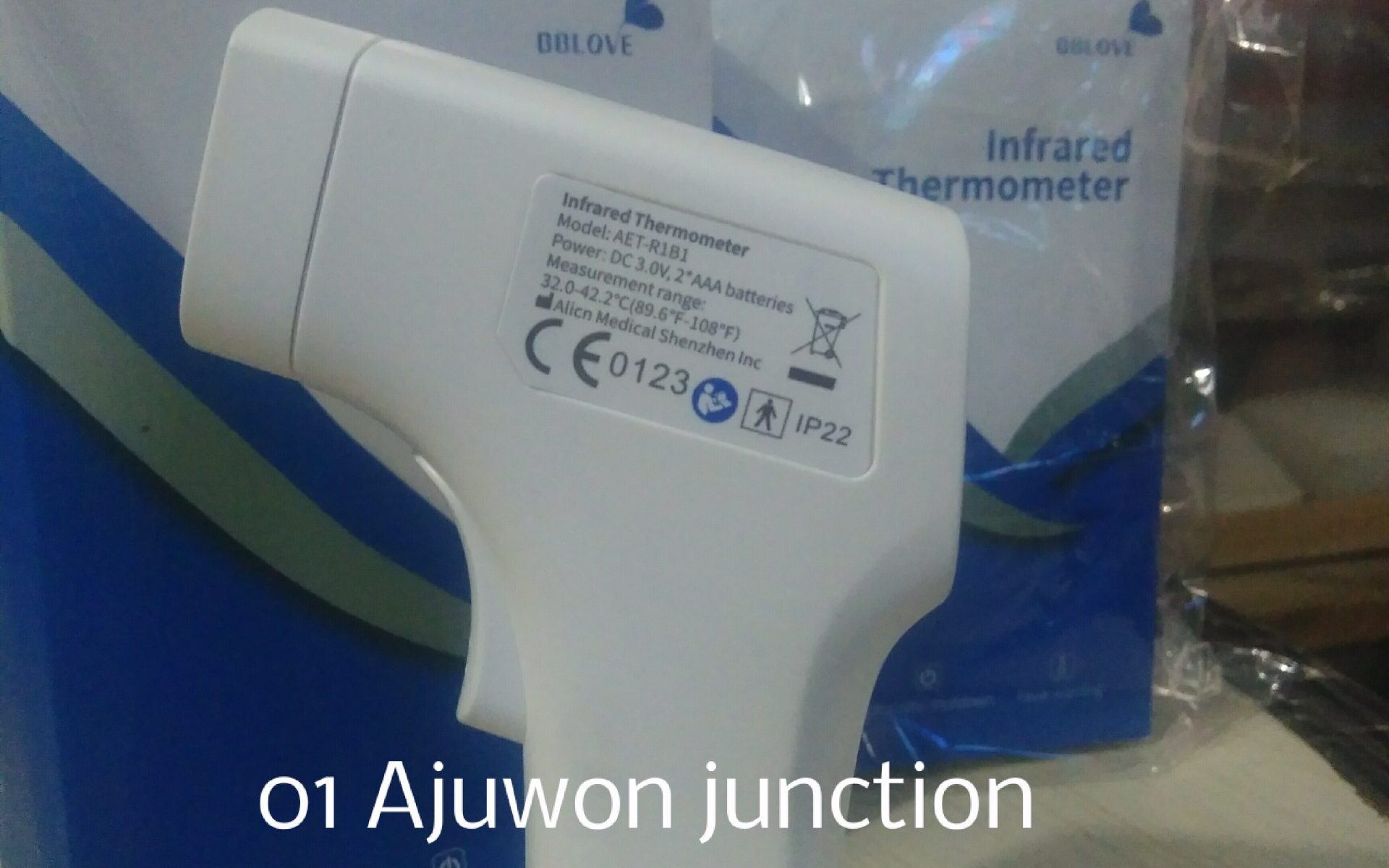
 

Buy infrared thermometer in Omole Ojodu Berger Magodo

You can buy 3 in 1 smart infrared thermometers at Eyeupdate clinic & optical supplies located at 01 Ajuwon junction, Ajuwon bus stop, beside BNPL filling station, Ajuwon near the grailand estate gate.

This is a non contact thermometer which can be used to take temperature measurement of the human body near the forehead, ear or wrist. Other features of the thermometer are:

Fast measurement (1 second)
Fever warning
Measurement range: 32. 0°C – 42. 2°C
Memory recall: 32 readings
Automatic shutdown: 60s
Error Resolution: 0.1°C
Can measure body temperature on human forehead
Can measure body temperature on the wrist
Can measure human temperature on the ear

Manufacturers: Alicn Medical Inc

Price: N35, 000
Tel: 08107531046
Address : Eyeupdate clinic & optical supplies,
01, Ajuwon junction, Ajuwon bus stop, off Elliott bus stop, Iju-Ishagah (beside BPNL Filling station, Ajuwon)

Buy infrared thermometer in Alagbole Akute Ajuwon Matogun

Eye clinics in Ojodu Berger Omole

Edited By: Dan Gudgel
Mar. 27, 2020

It is possible to do some basic testing of your vision and the vision of your family members and friends at home. Home eye testing is not a substitute for a complete medical eye examination by an ophthalmologist. Testing your vision at home will not be as accurate as what your ophthalmologist can do. But home eye testing could help you discover a problem that requires professional attention.

Many eye disorders can be corrected if discovered and treated early. Learn more about when eye exams are recommended.

Children under age 3 should have their vision tested by an optometrist, ophthalmologist or other vision care professional.

What You Need to Test Your Vision at Home

  • Something to cover the eye, like a paper cup or facial tissue.
  • Scissors.
  • Tape or tack to hang the test chart on the wall.
  • A pencil or pen to record the results.
  • A yardstick, tape measure, or ruler.
  • A flashlight, if available.
  • A well-lighted room at least 10 feet long.
  • The correct testing chart.

Prepare the Test Area

  • Select either the child’s or adult’s test chart and print it out.
    • When printed, the largest letter at the top of the chart should be just under an inch (23 millimeters) tall.
  • Measure 10 feet from a wall with no windows, and place a chair at this point.
  • Tape or pin the chart on the bare wall, level with the eyes of the person you will test as he or she sits in the chair.

Testing a Child (Age 3 or Older)

Explain to your child that you are going to play a “pointing game.” Using the practice E card, show him or her how to point in the same direction that the E is “pointing.” Turn the practice E in the four different directions (up, down, right, left). You may hold the practice card as close as the child wants until he or she can point in the four directions without help.

  • Have your child sit in the chair 10 feet from the chart, holding the cover over one eye without applying any pressure. Do not let the child peek. A second person may be needed to hold the cover in place and watch for peeking. If your child wears glasses, he or she should wear them during the test.
  • If the chart seems too dark to see clearly, use the flashlight to illuminate the test letters.
  • Point at each of the Es, starting with the largest. Have your child point in the direction the E is pointing.
  • Write down the number of the smallest line your child can correctly see (more than half of the Es correctly identified).
  • Then repeat the test with the other eye covered. If your child is tired, you may wish to test the other eye at a different time.

Testing an Adult or Older Child

  • Have the person being tested sit in the chair, 10 feet from the chart. Make sure the chart is level with his or her eyes.
  • Have the person being tested cover one eye. If he or she uses eyeglasses for distance vision, the glasses should be worn during the test.
  • Shine the flashlight on each line of the chart, while the person you are testing reads the letters out loud. Continue to the bottom row or until the letters are too difficult for the person to see.
  • Write down the number of the smallest line seen correctly (the line with more than half of the letters correctly identified).
  • Now repeat the test with the other eye covered and record the results.

What Are Normal Scores for Home Eye Testing?

A child should be able to see the 20/40 line by age 3 or 4 and the 20/30 line by age 5. If you test your child several times on different days and your child cannot see the expected line of print or cannot see the same line with each eye, he or she may have an eye problem. You should have your child evaluated by a physician.

An older child or adult should be reading the 20/20 line. You should arrange for a medical eye examination by an ophthalmologist if there are abnormal results.

Home Vision Test Results

Record the results of your home screening by filling in the number of the smallest line the person could read for each line below. If the test results indicate that you or your child needs to see an ophthalmologist, take the numbers you wrote down with you.

right eye left eye
Home Visual Acuity Screening 20/___ 20/___

Download Home Eye Testing Charts